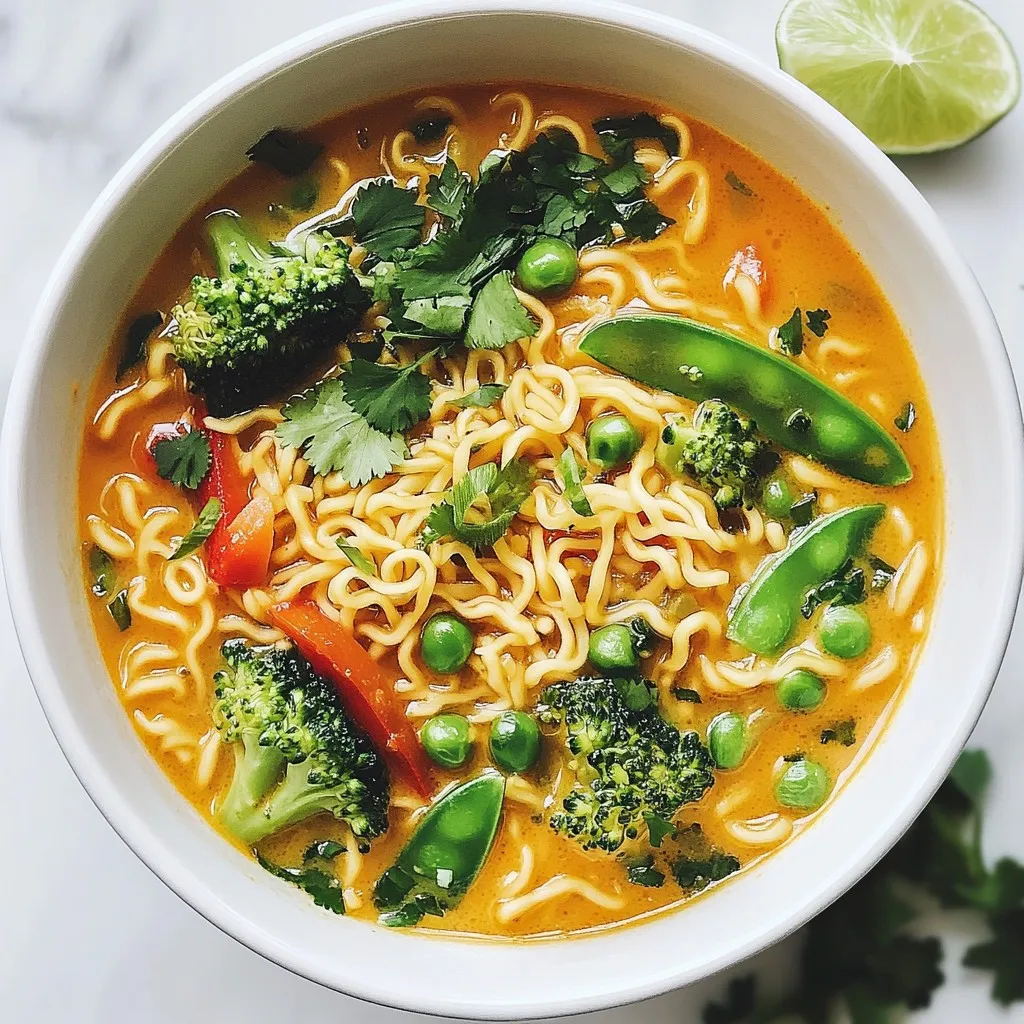
Craving a warm, flavorful bowl of comfort? You’re in the right place! This Coconut Curry Ramen combines creamy coconut milk and spicy red curry paste for a tasty treat. Packed with fresh veggies and toppings, it’s a meal that’s both satisfying and simple to make. Ready to take your taste buds on an adventure? Let’s dive into the delicious details of this comforting dish!
Why I Love This Recipe
- Quick and Easy: This coconut curry ramen can be prepared in just 20 minutes, making it a perfect weeknight dinner option.
- Flavorful and Aromatic: The combination of coconut milk and red curry paste creates a rich, aromatic broth that is simply irresistible.
- Nutritious Ingredients: Packed with fresh vegetables like broccoli, snap peas, and bell peppers, this dish is both healthy and satisfying.
- Customizable: You can easily adjust the vegetables or spice level to suit your personal taste, making it a versatile recipe.
Ingredients
Main Ingredients List
– 4 cups vegetable broth
– 1 can (14 oz) coconut milk
– 2 tablespoons red curry paste
Vegetables and Toppings
– 1 cup broccoli florets
– 1 cup snap peas
– 1 red bell pepper, thinly sliced
– 2 green onions, finely chopped
– Fresh cilantro, for garnish
Seasonings and Condiments
– 1 tablespoon soy sauce
– 1 tablespoon maple syrup
– Salt and pepper, to taste
– Lime wedges, for serving
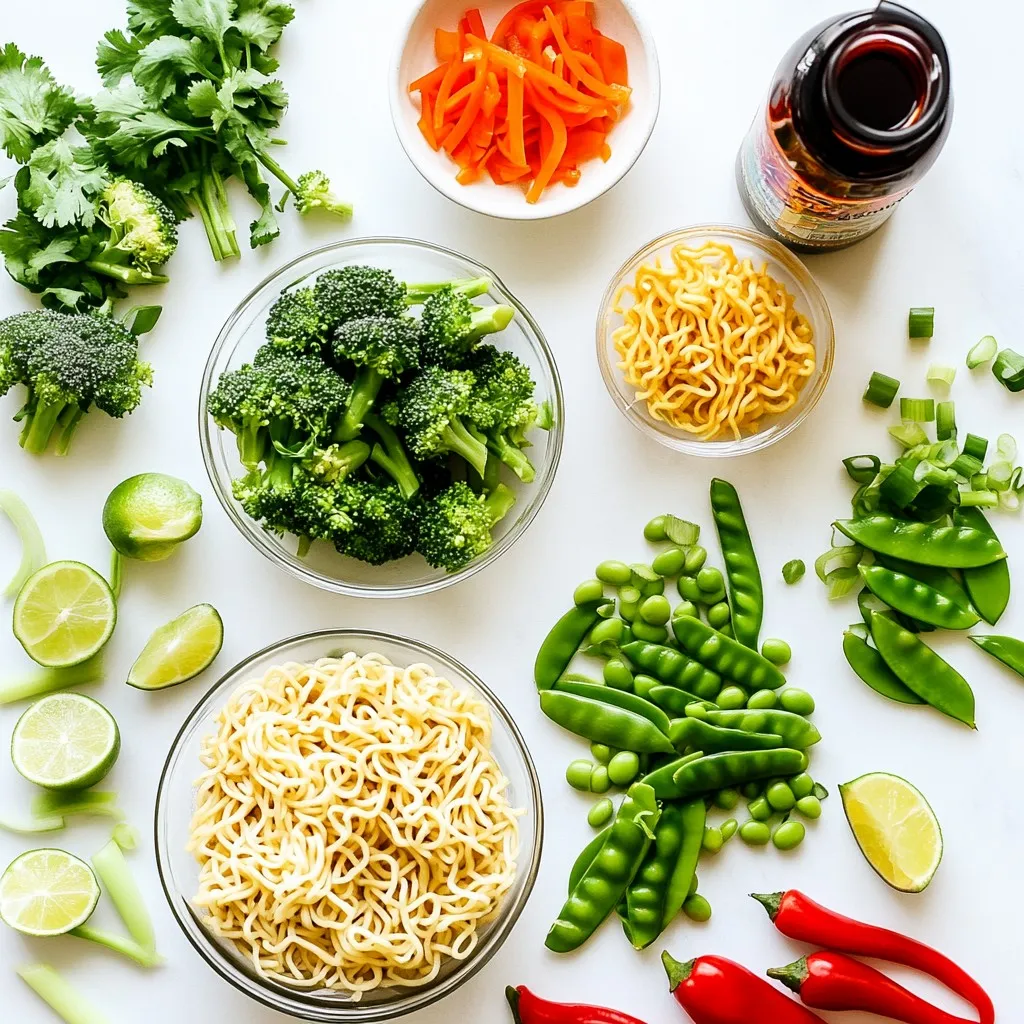
Coconut Curry Ramen brings warmth and comfort. The main ingredients set the stage for this dish. The vegetable broth forms a rich base. Coconut milk adds a creaminess that makes it special. Red curry paste gives it a bold flavor that excites your taste buds.
Next, we have the vegetables and toppings. Broccoli florets add crunch and color. Snap peas bring sweetness and freshness. Thinly sliced red bell pepper adds more color and a slight crunch. Green onions give a nice bite. Fresh cilantro ties it all together with its herbaceous notes.
Don’t forget the seasonings and condiments. Soy sauce adds depth and umami. Maple syrup balances the spice with a hint of sweetness. Salt and pepper help enhance all the flavors. Lime wedges are the finishing touch. A squeeze of lime brightens the dish, making each bite refreshing.
These ingredients work together to create a flavorful and comforting meal. You can easily adjust the veggies or toppings to your taste. Enjoy crafting your own version of Coconut Curry Ramen!
Step-by-Step Instructions
Preparing the Broth
1. Start by pouring 4 cups of vegetable broth into a large pot over medium heat.
2. Bring the broth to a gentle simmer. This should take just a few minutes.
3. Once it simmers, whisk in 1 can of coconut milk and 2 tablespoons of red curry paste.
4. Add 1 tablespoon of soy sauce and 1 tablespoon of maple syrup. Mix until smooth.
5. Let the broth simmer gently for about 5 minutes. This helps the flavors blend nicely.
Cooking the Ramen
1. Add 200 grams of ramen noodles to the pot.
2. Cook the noodles according to the package instructions, usually around 3-4 minutes.
3. Stir the noodles occasionally to make sure they do not stick together.
Adding Vegetables
1. In the last minute of cooking, add 1 cup of broccoli florets, 1 cup of snap peas, and 1 red bell pepper, thinly sliced.
2. Stir gently. You want the veggies to stay crisp, not mushy.
Serving the Dish
1. Once cooked, remove the pot from heat.
2. Ladle the ramen into deep bowls.
3. Garnish each bowl with finely chopped green onions and fresh cilantro.
4. Serve with lime wedges on the side for a zesty touch. Enjoy your warm, flavorful meal!
Tips & Tricks
Cooking Techniques
To make a perfect broth, focus on balance. Start with vegetable broth as your base. The coconut milk adds creaminess and sweetness. Mix in red curry paste for that warm kick. Simmer gently to let flavors blend.
For ramen noodles, timing is key. Add them to your broth when it simmers. Follow the package instructions, usually about 3-4 minutes. Stir occasionally to prevent sticking. This ensures they cook evenly and stay tender.
Flavor Enhancements
Adjust the spice levels by adding more or less red curry paste. If you like it spicy, try adding chili flakes or fresh chili. For a milder taste, reduce the curry paste. You can also add a dash of soy sauce for depth.
Try swapping seasonings for a unique twist. Add ginger for warmth or garlic for aroma. A splash of lime juice enhances freshness. Experiment with herbs like basil or mint for new flavors.
Presentation Tips
Serve ramen hot in deep bowls to showcase its beauty. The colorful veggies should stand out. Place lime wedges beside the bowls for a pop of color. This invites guests to squeeze fresh juice over their meal.
Garnish each bowl with green onions and fresh cilantro. This adds flavor and a bright look. You can also sprinkle sesame seeds for extra crunch. Make it inviting and fun for everyone to enjoy!
Pro Tips
- Tip Title: Use Fresh Ingredients: Fresh vegetables will enhance the flavor and texture of your ramen. Look for vibrant, seasonal produce for the best results.
- Tip Title: Adjust Spice Level: If you enjoy a bit more heat, consider adding sliced chili peppers or a dash of sriracha to your broth for an extra kick.
- Tip Title: Noodle Cooking Tips: To prevent your ramen noodles from becoming mushy, be sure to cook them just until al dente, as they’ll continue to soften in the hot broth.
- Tip Title: Garnishing Wisely: Don’t skip the garnishes! Fresh herbs and lime juice add brightness and complexity to the dish, making it visually appealing and delicious.
Variations
Ingredient Swaps
You can swap proteins in this dish to suit your taste. Tofu is a great choice for a vegan option. It absorbs flavors well and adds a nice texture. If you prefer meat, chicken or shrimp works well too. Just cook them before adding to the broth.
Adding different vegetables can change the dish. Try carrots for sweetness or mushrooms for umami. You can also use spinach or bok choy for a leafy green twist. The more colors, the better!
Different Flavor Profiles
Changing the curry paste can give your ramen a new taste. Green curry paste adds a fresh, herbal flavor. Yellow curry paste brings a milder, sweeter taste. You can even make your own paste for a unique touch.
Using different types of broth can also change the vibe. Chicken broth adds depth, while miso broth gives a rich, savory flavor. Each option adds its own charm and keeps things exciting.
International Influences
Coconut curry ramen can blend with other cuisines for fun fusion ideas. Try adding kimchi for a Korean twist or serve it with tacos. The mix of flavors can surprise and delight your taste buds.
Pairing this ramen with side dishes from other cultures can enhance your meal. Serve it with spring rolls for a light touch or a simple salad for crunch. Enjoy exploring new flavors with your coconut curry ramen!
Storage Info
Storing Leftovers
To keep your coconut curry ramen fresh, store it in the fridge. Use airtight containers to prevent spoilage. You can keep it for up to three days. Divide the ramen into single servings for easy meals later.
Reheating Instructions
When reheating ramen, the key is to maintain its texture. I suggest using the stovetop for the best results. Pour the ramen into a pot and heat over low. Stir until it warms. If you use a microwave, place it in a bowl. Heat in short bursts, stirring in between. This helps avoid soggy noodles.
Freezing Options
You can freeze your ramen for longer storage. It’s best to freeze the broth and noodles separately. This way, the noodles won’t become mushy. Place the cooled broth in a freezer-safe bag. For the noodles, you can keep them in a container. When you’re ready to eat, thaw both in the fridge overnight. Heat the broth on the stove and cook the noodles fresh to enjoy.
FAQs
How to Make Coconut Curry Ramen Vegan?
To make this dish vegan, swap the broth with vegetable broth. Use coconut milk instead of dairy. For the red curry paste, check the label to ensure it contains no fish sauce. If you use soy sauce, make sure it is vegan. You can replace any animal protein with tofu or chickpeas. This keeps the meal hearty and plant-based.
Can I Use Different Noodles?
Yes, you can switch up the noodles! Soba or udon noodles work well. Rice noodles are a gluten-free option, too. Cooking times will vary; check the package. Ramen noodles often cook in 3-4 minutes, while soba may take about 5 minutes. Udon noodles usually need around 8-10 minutes.
What is the Origin of Coconut Curry Ramen?
Coconut curry ramen blends two worlds. Ramen hails from Japan, known for its rich broth and noodles. Curry has deep roots in many Asian cultures. This dish shows how flavors can mix. The use of coconut adds a tropical twist, making it unique. Both ramen and curry share stories of comfort and joy, making this dish special.
What Can I Serve with Coconut Curry Ramen?
For a complete meal, consider light side dishes. A simple cucumber salad pairs well. Spring rolls offer a nice crunch. For drinks, try iced green tea or a light beer. These choices will complement the curry flavors nicely. Enjoying them together creates a balanced dining experience.
This blog post took you through the basics of making coconut curry ramen. We covered the main ingredients, including vegetable broth, coconut milk, and fresh veggies. You learned key steps for preparing your broth and noodles, as well as tips for enhancing flavor and presentation.
Remember, you can customize your ramen with different proteins and vegetables. Don’t forget about storage tips for leftovers! Enjoy your cooking adventure and impress yourself with this delicious dis