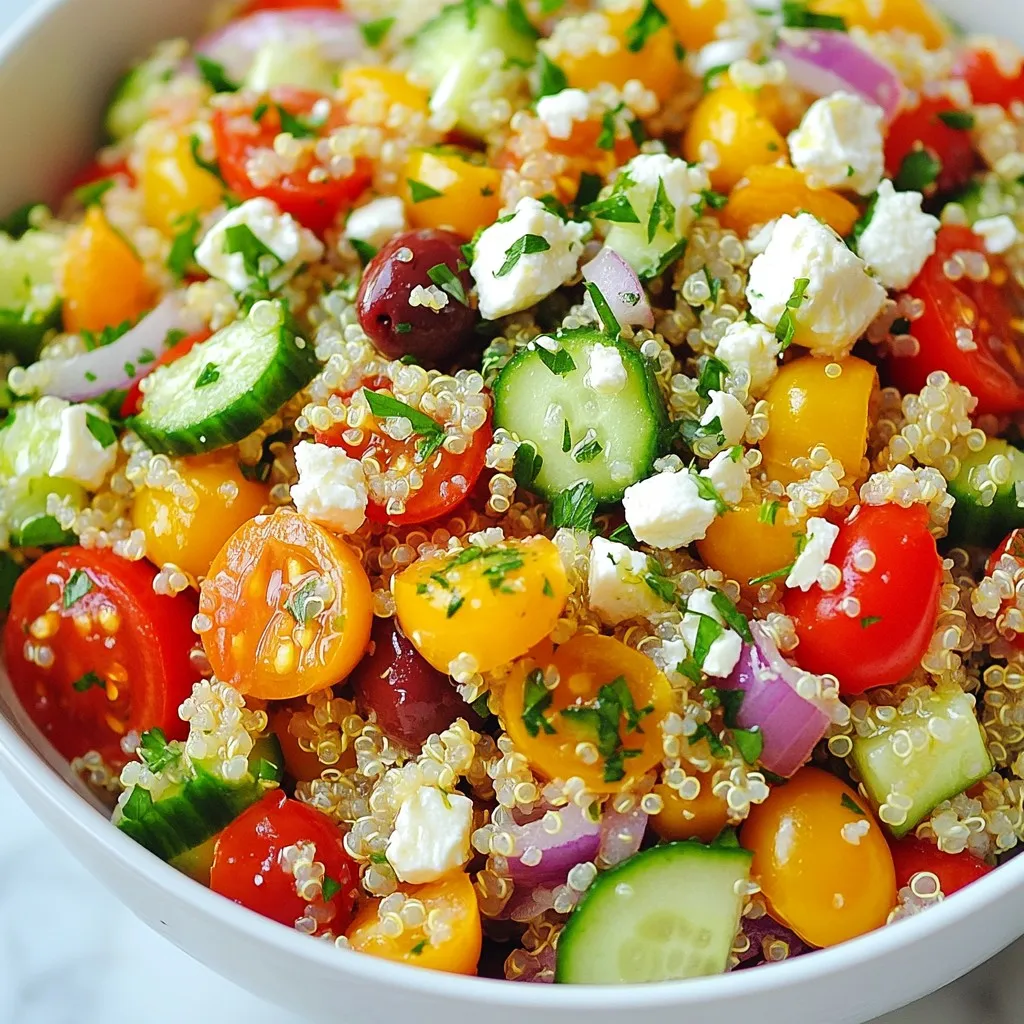
Looking for a fresh and flavorful dish that’s packed with nutrients? This Mediterranean Quinoa Salad is your new go-to. With vibrant veggies and tasty ingredients, it’s perfect for lunch, dinner, or a snack. I’ll walk you through easy steps, share tips for selecting fresh produce, and suggest tasty variations. Get ready to impress yourself and your guests with this delightful and healthy meal!
Why I Love This Recipe
- Fresh and Vibrant: This Mediterranean Quinoa Salad is packed with colorful vegetables that not only look great but also bring a refreshing taste to your plate.
- Nutritious and Wholesome: Quinoa is a complete protein, making this salad a healthy choice for a light meal or side dish. It’s both filling and nutritious!
- Easy to Prepare: With minimal cooking involved, this salad comes together quickly, making it perfect for busy weeknights or meal prep for the week ahead.
- Customizable: You can easily adapt this recipe to your taste by adding different vegetables, proteins, or dressings, making it versatile for any occasion.
Ingredients
Full List of Ingredients
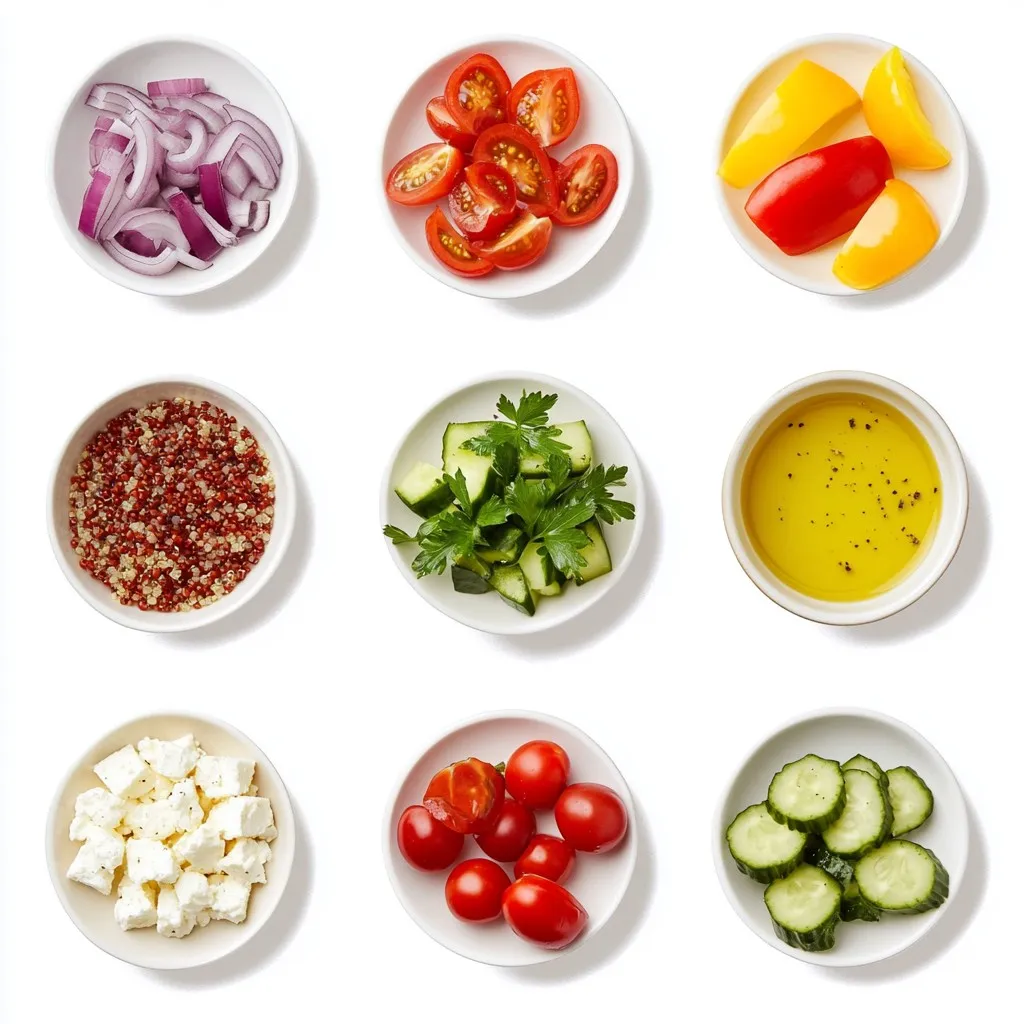
To make this vibrant Mediterranean quinoa salad, gather these fresh ingredients:
– 1 cup quinoa, thoroughly rinsed
– 2 cups vegetable broth (or water)
– 1 cup cherry tomatoes, halved
– 1 medium cucumber, diced
– 1 large bell pepper (choose red or yellow), diced
– 1/2 medium red onion, finely chopped
– 1/2 cup Kalamata olives, pitted and sliced
– 1/4 cup feta cheese, crumbled (optional)
– 3 tablespoons high-quality olive oil
– 2 tablespoons fresh lemon juice
– 1 teaspoon dried oregano
– Sea salt and freshly cracked black pepper to taste
– Fresh parsley, chopped, for garnish
Recommended Substitutes for Key Ingredients
If you don’t have some ingredients, don’t worry! Here are some good swaps:
– Quinoa: Try bulgur, farro, or couscous for a different grain.
– Kalamata olives: Use green olives or capers for a briny kick.
– Feta cheese: Crumbled goat cheese or vegan cheese works well too.
– Vegetable broth: Water or chicken broth can substitute nicely.
Tips for Selecting Fresh Produce
When choosing your veggies, look for these tips:
– Tomatoes: Pick bright red tomatoes with no blemishes. They should feel firm.
– Cucumber: Choose a cucumber that feels heavy and has a smooth skin.
– Bell Pepper: Select peppers with shiny skin and no soft spots.
– Onion: A firm onion with dry, papery skin is best.
These tips help ensure your salad is fresh and tasty!
Step-by-Step Instructions
Cooking the Quinoa
To start, you need to cook the quinoa. First, boil 2 cups of vegetable broth or water in a medium pot. Add 1 cup of rinsed quinoa once it boils. Cover the pot and lower the heat. Let it simmer for about 15 minutes. The quinoa will absorb all the liquid and become fluffy. After cooking, take it off the heat and let it cool for a few minutes. Fluff it gently with a fork to keep it light.
Preparing the Vegetables
While your quinoa cools, chop your veggies. In a large bowl, combine the halved cherry tomatoes, diced cucumber, diced bell pepper, and finely chopped red onion. For a salty kick, add 1/2 cup of sliced Kalamata olives. If you enjoy feta cheese, sprinkle in 1/4 cup now for extra flavor. Fresh veggies add color and crunch, making your salad vibrant.
Mixing and Dressing the Salad
Once the quinoa is cool, add it to the bowl with the veggies. Mix them gently, so you don’t mash the ingredients. Now, make the dressing. In a small bowl, whisk together 3 tablespoons of olive oil, 2 tablespoons of lemon juice, 1 teaspoon of dried oregano, and some salt and pepper. Pour the dressing over the salad. Toss everything together to coat all the ingredients well. Let the salad sit for 10-15 minutes to blend the flavors. Serve it chilled or at room temperature, topped with fresh parsley for a pop of color. Enjoy your fresh and flavorful dish!
Tips & Tricks
How to Make Quinoa Fluffier
To make your quinoa fluffier, rinse it well before cooking. Rinsing removes bitter saponins. Use two cups of broth for one cup of quinoa. This broth adds flavor and moisture. Cook on low heat and avoid lifting the lid. Let it simmer for 15 minutes. Once done, remove it from heat and let it sit for a few minutes. Fluff the quinoa gently with a fork. This keeps it light and airy.
Best Practices for Dressing the Salad
For the best salad dressing, use fresh lemon juice and high-quality olive oil. Whisk them together with oregano, salt, and pepper. The key is to mix until it’s well combined. Drizzle the dressing slowly over the salad. Toss gently to coat every piece. Taste it and adjust as needed. A little extra salt or lemon juice can enhance the flavors. Let the salad rest for 10-15 minutes. This helps the flavors blend nicely.
Serving Suggestions for Freshness
Serve your Mediterranean quinoa salad chilled or at room temperature. For a fresh look, garnish it with chopped parsley. This adds a pop of color and extra flavor. Pair it with grilled chicken or fish for a complete meal. You can also enjoy it as a light lunch or side dish. If you want to make it more filling, add beans or chickpeas for protein.
Pro Tips
- Rinse Quinoa Thoroughly: This step removes the natural coating called saponin, which can make the quinoa taste bitter.
- Let It Cool: Allow the quinoa to cool after cooking; this prevents the vegetables from wilting when mixed.
- Fresh Herbs Galore: Feel free to add fresh herbs like mint or basil for an extra burst of flavor.
- Make It Ahead: This salad tastes even better the next day as the flavors meld together, making it perfect for meal prep!
Variations
Adding Protein Options
You can easily add protein to your Mediterranean quinoa salad. Chicken, shrimp, or chickpeas work great. For chicken, grill or roast it first. Shrimp can be sautéed in olive oil for a quick touch. Use canned chickpeas for a plant-based option. This addition makes the salad filling and hearty. Each protein brings its own flavor and texture.
Different Flavor Profiles
Changing the dressing can alter the flavor profile. Try adding balsamic vinegar instead of lemon juice. You can also mix in fresh herbs like basil or mint. These herbs add a unique twist. If you prefer spice, add red pepper flakes or a pinch of cayenne. This gives the salad a kick. Remember, your taste buds can guide your choices.
Seasonal Ingredient Swaps
Seasonal ingredients can enhance freshness. In summer, add ripe peaches or watermelon. In the fall, roasted butternut squash adds sweetness. Winter can bring in roasted beets or citrus fruits. These swaps keep your salad exciting and new. They also ensure you use what’s fresh in your area. Fresh, seasonal produce keeps salads vibrant and tasty.
Storage Info
How to Store Leftovers
To keep your Mediterranean quinoa salad fresh, place it in an airtight container. This will help prevent any odors from other foods in your fridge from affecting the salad’s taste. Make sure the salad is cool before sealing it. Store it in the fridge for up to three days.
Best Container Options for Freshness
Choose glass containers for the best storage. They help keep the salad fresh and do not stain. If you prefer plastic, use BPA-free containers. Look for containers with a tight seal to keep moisture in and air out.
Reheating Tips and Duration
You can enjoy this salad cold or at room temperature. If you prefer it warm, heat it gently. Place the salad in a microwave-safe dish. Heat it for about 30 seconds, then stir. Check if it’s warm enough, and heat in additional 15-second bursts if needed. Avoid overheating, as it may change the texture of the vegetables.
FAQs
Can I make this salad ahead of time?
Yes, you can make this salad ahead of time. It tastes even better after the flavors blend. Prepare the salad, cover it, and store it in the fridge. Enjoy it within two days for the best taste.
What can I use instead of quinoa?
If you want to replace quinoa, try using couscous, bulgur, or farro. These grains give a nice texture and flavor. Keep in mind that they may require different cooking times. Always use the right liquid ratio for cooking.
Is this salad gluten-free?
Yes, this Mediterranean quinoa salad is gluten-free. Quinoa is a great choice for gluten-free diets. Just ensure that any substitutes you use, like couscous, are also gluten-free. Always check labels when buying packaged products.
This blog post covered how to create a fresh and tasty quinoa salad. We explored the right ingredients, cooking methods, and useful tips. I shared how to choose fresh produce and offered substitutes for key items. I also discussed ways to add protein and mix flavors. Remember to store your leftovers properly for the best taste. With these steps, you can enjoy a delightful salad any time. Now, it’s your turn to experiment and make it your ow