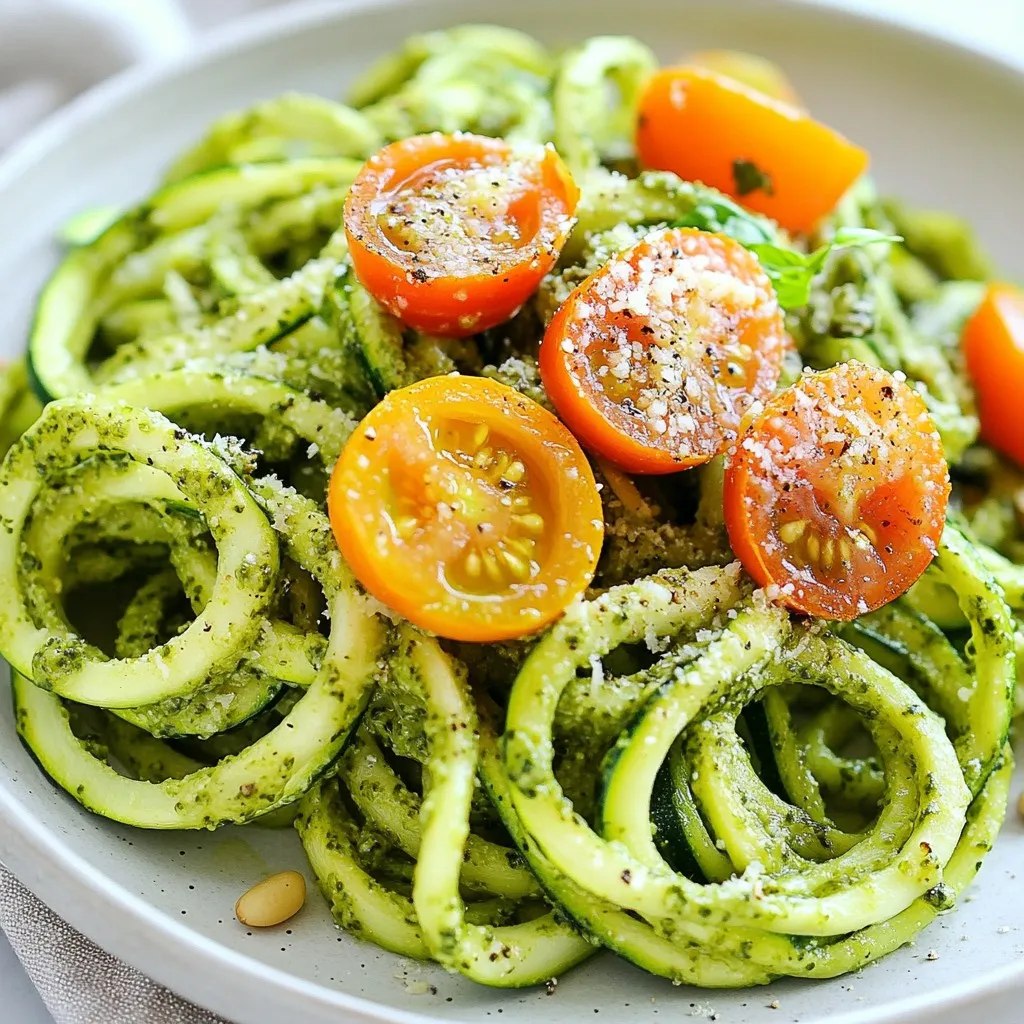
Looking for a quick and tasty dinner? Pesto Parmesan Zucchini Noodles are your answer! This dish is light, flavorful, and easy to make. I’ll show you how to turn fresh zucchini into delightful noodles and mix them with rich pesto and parmesan. Whether you’re aiming for a healthy meal or just want to try something new, you’ll love this recipe. Ready to dive in? Let’s get started!
Why I Love This Recipe
- Fresh and Flavorful: This recipe brings together the freshness of zucchini and the vibrant flavors of homemade pesto, creating a dish that is both light and satisfying.
- Quick and Easy: With just 15 minutes of prep and cook time, this recipe is perfect for busy weeknights or a quick lunch.
- Healthy Alternative: Zucchini noodles are a fantastic low-carb option, making this dish a great choice for those looking to reduce their carbohydrate intake.
- Customizable: The pesto can be easily adjusted with different nuts or cheese, allowing you to tailor the flavors to your liking.
Ingredients
List of Required Ingredients
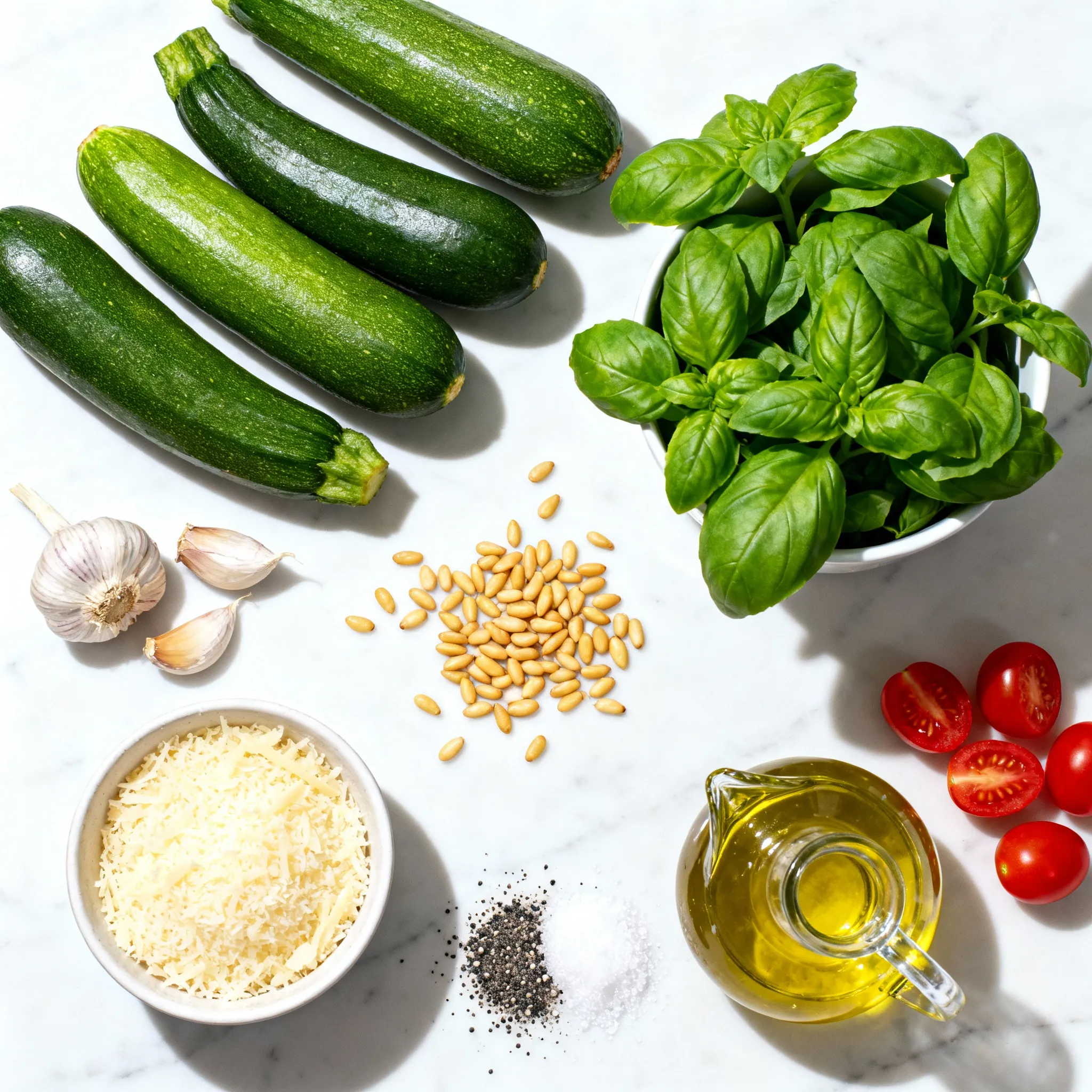
To make Pesto Parmesan Zucchini Noodles, gather these simple items:
– 4 medium zucchinis
– 1 cup fresh basil leaves, tightly packed
– 1/4 cup pine nuts (or walnuts)
– 1/2 cup freshly grated Parmesan cheese, plus extra for serving
– 2 cloves garlic, peeled
– 1/4 cup extra-virgin olive oil
– Salt and freshly ground black pepper to taste
– Handful of cherry tomatoes, halved (for garnish)
Ingredient Substitutions
You can swap ingredients if you like. Here are some ideas:
– Use walnuts instead of pine nuts for a different flavor.
– Try nutritional yeast if you want a vegan option for Parmesan cheese.
– Use sunflower seeds in place of pine nuts for nut-free pesto.
– If you can’t find fresh basil, try spinach or arugula for a twist.
Best Brands for Pesto and Parmesan Cheese
For the best flavor, I recommend these brands:
– Basil Pesto: Look for brands like Rao’s or Barilla for high-quality options.
– Parmesan Cheese: Grana Padano or Parmigiano-Reggiano are excellent choices.
– Always choose freshly grated cheese for the best taste in your dish.
Step-by-Step Instructions
Preparing Zucchini Noodles
To start, grab your medium zucchinis. Use a spiralizer to turn each zucchini into long noodles. If you lack a spiralizer, a vegetable peeler works as well. Just peel the zucchini and then slice it into noodle-like strips. Once done, place the noodles in a colander and sprinkle them lightly with salt. This helps remove extra moisture. Set them aside for a few minutes while you prep the pesto.
Making the Pesto
Next, it’s time to make the pesto. In a food processor, combine a cup of fresh basil leaves, 1/4 cup of pine nuts, and 1/2 cup of grated Parmesan cheese. Toss in two peeled garlic cloves too. Secure the lid and pulse until everything is finely chopped and blended. Now, while the processor runs, slowly drizzle in 1/4 cup of extra-virgin olive oil. Keep blending until the pesto is smooth and creamy. Taste it, and add salt and freshly ground black pepper if needed.
Mixing Noodles and Pesto
Now, we mix the zucchini noodles with the pesto. In a large mixing bowl, add your prepared zucchini noodles. Pour the fresh pesto over the noodles. Gently toss everything together. You want all the noodles coated in that vibrant green sauce. Once mixed, it’s time to serve! Portion the noodles onto plates and top with halved cherry tomatoes. A sprinkle of extra Parmesan cheese adds a nice finishing touch. Enjoy this light and flavorful meal!
Tips & Tricks
Perfecting Your Pesto
To craft the best pesto, use fresh basil leaves. They bring bright flavor. Always choose pine nuts for a rich taste. If you prefer, walnuts are a great substitute. When blending, add the olive oil slowly. This helps create a smooth texture. Taste your pesto as you go. Adjust with salt and pepper for balance.
Cooking Tips for Zucchini Noodles
For zucchini noodles, start by spiralizing the zucchinis. A spiralizer makes perfect noodles. If you lack one, a vegetable peeler works too. Cut long strips into shorter pieces. After spiralizing, place the noodles in a colander. Sprinkle with salt to draw out moisture. Let them sit for a few minutes. This step ensures your dish won’t be watery.
Presentation Tips for Serving
Serving is key to a great meal. Portion the zucchini noodles on plates. Drizzle the pesto generously over the noodles. Add halved cherry tomatoes for color and flavor. Finish with a sprinkle of extra Parmesan cheese on top. For flair, add fresh basil leaves. A dash of cracked black pepper can brighten each dish.
Pro Tips
- Use Fresh Ingredients: Always opt for fresh basil and high-quality olive oil to elevate the flavors of your pesto.
- Adjust the Thickness: If your pesto is too thick, add a little more olive oil or a splash of lemon juice to reach your desired consistency.
- Prevent Soggy Noodles: After salting the zucchini noodles, let them sit for a few minutes, then pat them dry to remove excess moisture.
- Experiment with Nuts: Feel free to substitute pine nuts with other nuts like walnuts or almonds for a different flavor profile in your pesto.
Variations
Adding Protein Options
You can add protein to your Pesto Parmesan Zucchini Noodles for a heartier meal. Common choices include grilled chicken, shrimp, or tofu. Simply cook the protein of your choice and mix it in with the zucchini noodles. This will enhance the dish’s flavor and make it more filling. If you prefer plant-based options, chickpeas or lentils are great alternatives.
Vegetarian and Vegan Alternatives
For a vegetarian twist, use more cheese or add a dollop of ricotta on top. If you’re looking for vegan options, replace Parmesan with nutritional yeast. This will give a cheesy flavor without dairy. You can also make a nut-based cheese for a creamier texture. Add in some nuts or seeds for extra crunch and nutrition.
Seasonal Ingredient Swaps
Seasonal ingredients can elevate your dish. In summer, toss in fresh cherry tomatoes or bell peppers for color. In the fall, consider adding roasted butternut squash or mushrooms. These swaps keep your meal fresh and exciting. Always look for local produce to enhance flavor and support sustainability.
Storage Info
How to Store Leftover Zucchini Noodles
To store leftover zucchini noodles, place them in an airtight container. Cover them tightly to keep moisture out. These noodles can last for about two days in the fridge. Be aware that they may lose some texture. If you want to keep them fresh longer, consider storing them without salt. Salt can draw out moisture and make them soggy.
Freezing Pesto for Future Use
To freeze pesto, first pour it into ice cube trays. This method helps you use just the right amount later. Once the pesto is frozen, pop the cubes into a freezer bag. Label the bag with the date so you remember when you made it. Frozen pesto can last for up to three months. When you want to use it, thaw in the fridge overnight or microwave for a quick defrost.
Best Practices for Reheating
When reheating zucchini noodles, do it gently. Use a pan on low heat to warm them up. Add a splash of water or olive oil to prevent sticking. Stir them gently to avoid breaking the noodles. Heat for just a few minutes until warm. Avoid overheating, as this can make them mushy. If you’re reheating pesto, warm it in a small pot on low heat, stirring often. This keeps the flavors bright and fresh.
FAQs
Can I make zucchini noodles ahead of time?
Yes, you can make zucchini noodles ahead. Prepare them and store in the fridge. Use a colander to drain excess water. This helps keep them from getting soggy. I suggest using them within one day for the best taste and texture.
What is the best tool for spiralizing zucchini?
The best tool for spiralizing zucchini is a spiralizer. It quickly turns zucchini into noodles. You can find both handheld and countertop models. If you don’t have a spiralizer, a vegetable peeler works great. It makes long strips that you can cut into noodle shapes.
How can I make pesto without pine nuts?
You can make pesto without pine nuts by using other nuts. Walnuts are a good substitute and add nice flavor. You can also use sunflower seeds for a nut-free option. Just blend them with basil, garlic, and cheese for a tasty result.
In this post, I covered the essentials for making a great zucchini noodle dish. We explored key ingredients, including substitutions and brands. Next, I guided you through step-by-step instructions on preparing zucchini noodles and making pesto. I shared useful tips for cooking and serving. We also looked at variations, storage tips, and answered common questions.
Final thoughts: Embrace creativity in your cooking. Enjoy experimenting with flavors and texture